Make your Online Chatting experience safe

online chatting

With the advent of the internet, the time we spend in the digital world has increased considerably. This has led to more people seeking friends and relationships online. Social networking sites have become increasingly popular as they help us stay connected with friends in almost every part of the world. The idea of making new friends and the comfort and convenience of interacting online makes networking sites seem very appealing, especially to youngsters. However, this could expose them to the risk of being exploited by online predators.

There are several chat apps where people with malicious intentions can easily open accounts, often without the need of any identity verification. Using fake profiles, predators can lure innocent teens and adults to share confidential information, which can thereafter be used to exploit them. Skilled hackers can easily hack into people’s chat accounts and extract confidential data, which can then be used for wrong purposes.

Honey Trapping is one of the common scams on the internet today.

Honey trapping is a scam/ tactic that uses romantic or intimate relationships to obtain sensitive information. A honey trap involves a fraudulent dating site and proposals from unknown people, who first identify their targets and befriend them to later lure them into spilling crucial information, which can compromise not only their safety but the nation’s security too. You could end up losing money or your system might get infected as a result of falling into this trap. Online dating sites are common hunting grounds for honeypot scammers.

Safety measures to be observed when chatting online:

  1. Do not Give Away Your Personal Information

That includes your address, phone number, or any sensitive information that could create problems for you later on. When you start chatting with someone you met online, stick to general topics and refrain from talking too much about yourself.

  1. When interacting with strangers, avoid revealing your real identity. Never use an online ID that consists of your real name.
  1. Do not share pics

Do not share your pics in chat rooms as they can be misused. Identity theft is a grave issue and can have dangerous repercussions.

  1. Do not trust anyone you do not know personally. Online predators are good at deceiving others, with fake personalities.
  2. Remember that personally meeting strangers you have interacted with on chat apps can be very risky. If at all you have decided to meet up, then make sure that you meet at a public place.
  3. Keep a check on your status messages:

Avoid using your Facebook status application to tell the world about your itinerary for the day. You never know who is stalking you in the virtual world.

  1. Keep changing your password often

           Use strong passwords. Remember your password is like the key to your home, don’t share it with anyone, and change it often.

  1. Impersonation is rampant. Beware!

The anonymity provided by the virtual world and the fear of being stalked often prompts people to impersonate. A considerable number of Facebook profiles are fake and people often withhold correct information about themselves.

  1. Avoid having private chats with strangers

Do not leave public chat rooms and encourage private conversations unless you are very sure about the identity of the person you are chatting with. Chatting in public ensures someone or the other would alert you in case you are being harassed. Private chats can often be used by online bullies to harass you.

  1. Another aspect of chatting online is that you should pay attention to is what the other person is saying and be on the lookout for suspicious behaviour.

Remember, online chatting is like driving on an expressway. If you are attentive and follow the rules, you are safe and it would be a pleasurable experience. If you go overboard and ignore the warning signals, accidents are inevitable.

Credit Triangle is a one-stop solution for all your credit and finance needs. We help you with credit health management, repair, and improvement.

Stay Protected From Net Banking Frauds

Net Banking

The last few years have seen a significant rise in the use of digital modes of payment (Net Banking). While digital transactions seem convenient and easy, this has also led to cybercriminals swarming the internet to perform online crimes including data fraud, identity theft, and hacking. The Indian Banking Finance Services and Insurance (BFSI) sector has been at the forefront of cyber-attacks – targeted at the Asian region.

Different forms of Banking Frauds

  • Phishing:

This type of banking fraud is used by cybercriminals to obtain sensitive or personal information such as credit card numbers, bank information, or passwords. It is usually carried out through spoofed emails and spoofed websites that prompt users to disclose their personal details. Fraudsters distribute links to these websites by SMS, social media, email, and Instant Messenger, among other methods.

  • Vishing:

Phone calls pretending to be from bank / non-bank e-wallet providers/telecom service providers to lure customers into sharing confidential details such as credit card, bank account, and social security numbers in the pretext of KYC-updation, unblocking of account / SIM-card, crediting debited amount, etc.

  • Smishing:
    Such frauds combine phishing with a short message service. Attackers send SMS messages (or text messages) to trick victims into sharing personal information or installing malware on their devices.
  • ATM card Skimming:

In this method, the secret information in the magnetic strip of your credit/debit card is copied and then used on a counterfeit card. Skimming devices are installed in ATM machines by fraudsters who take data from the customer’s card. The information so captured can be used to make fraudulent transactions.

  • Remote Access:

Fraudsters trick customers to download an application on their mobile phone/computer which can access all the customers’ data on that customer’s device. This information is then used to carry out unauthorised transfers of funds or make payments using the customer’s net banking/payment apps

  • Frauds using online sales platforms:

This involves misusing the ‘collect request’ feature of UPI by sending fake payment requests with messages like ‘Enter your UPI PIN’ to receive money.

  • Fake numbers of banks/e-wallet providers on web pages/social media and displayed by search engines, etc. Once the customers call on these contact numbers, they are asked to share their card credentials/details for verification. Assuming the fraudster to be a genuine representative, customers share their security details and thus fall prey to fraud.

Ways to protect yourself from online frauds:

  • Use strong, unique passwords for your net banking and turn on two-factor authentication for them.
  • Avoid using public computers for online banking, as this exposes your personal and financial information.
  • Use secure and verified apps or websites for online monetary transactions. Avoid questionable websites.
  • Avoid using public Wi-Fi. Use only a secured internet connection for online payments.
  • Protect your computer and smartphone with strong, up-to-date security software.  The antivirus software must be installed and updated on a regular basis.
  • Avoid sharing your account details including login ID, password, card details, and other information with anyone.
  • If your card is lost, notify the bank immediately and get it blocked.

Credit Triangle is a one-stop solution for all your credit and finance needs. We help you with credit health management, repair, and improvement.

Phishing Attacks on the Rise

Phishing Attacks

The Indian baking system has witnessed a significant rise in phishing attacks. According to the research firm Statista, the Reserve Bank of India reported a total of 7,400 cases of banking fraud in India in 2021, amounting to Rs 1.38 lakh crore. Phishing is among the major types of banking fraud globally.

What is Phishing?

Phishing is a form of internet fraud that attempts to steal your money, or your identity, by getting you to reveal personal information — such as credit card numbers, bank information, or passwords — on websites that pretend to be legitimate. It is usually carried out through spoofed emails and spoofed websites that prompt users to disclose their personal details.

Phishing attacks are the most common method used by cybercriminals to attack the Financial Services industry. Most commonly, phishing attacks occur through targeted emails, however, attacks are getting more sophisticated and there are now multiple avenues criminals are using to obtain information.

In an article dated 7 November 2022, Trend Micro, a global cybersecurity leader, stated that they have found five banking malware families targeting customers of seven banks in India to steal personal and credit card information via phishing campaigns.

Phishing attacks are not only being used to steal critical user data but also to conduct fraudulent transactions online.

 Steps to protect yourself from Phishing Attacks

• Avoid browsing un-trusted websites and exercise caution while clicking on the link provided in any unsolicited email and SMS. It is highly possible that the link contains malicious content or is an attempt to phish the customer.
• One must avoid sharing personal information such as passwords, personal account numbers, and bank details.
• It is important to check the URL before logging into any website. If the text is ‘https://’ and is not ‘http://’ it means that the website uses encryption and is an authentic website. The ‘s’ in ‘https://’ stands for ‘secured’.
• On getting a message that appears to be from your bank, before providing any details, it is advisable to call the bank and confirm whether the email or message has been sent by them.
• Exercise caution while opening email attachments. Only click on URLs that clearly indicate the website domain.
• It is essential to update your passwords regularly and protect your accounts by using multi-factor authentication.
• Installing anti-virus software, spyware filters, email filters, and firewall programs also helps in avoiding phishing attacks.
• Monitor your bank, credit, and debit card statements regularly to keep track of any fraudulent transactions. Report any unusual activity in your account immediately to your respective bank.

Credit Triangle is a one-stop solution for all your credit and finance needs. We help you with credit health management, repair, and improvement.
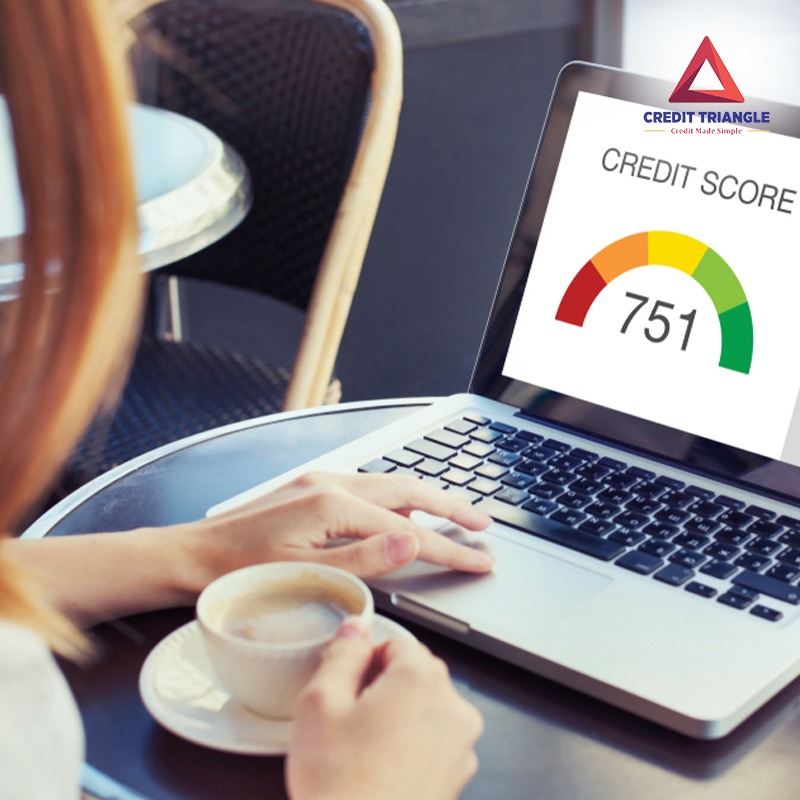
Use Credit Only When Benefits Outweigh Costs

Polonius, a character in Shakespeare’s play Hamlet, advises his son, “Neither a lender nor a borrower be.” With due respect to Polonius and his genius, credit has become an integral part of our lives. While most of us cannot be lenders, we are bound to be borrowers because of the system we live with. 

In today’s world, the significant rise in demand for all kinds of products and services has fuelled the demand for credit. 

Uses and Misuse of credit 

Using credit has two facets: on one hand, it gives you immediate benefits by helping you fulfill your needs and aspirations but on the other hand, it exerts financial and psychological costs, if not handled properly. It is therefore advisable to use the credit only when the advantages outweigh the costs. 

The uses of credit are humongous ranging from medical emergencies, education needs, travel emergencies, to fulfilling immediate personal needs etc. Credit cards are usually very handy in most of these situations. 

While credit cards are very convenient to use and extremely helpful in times of need, their misuse can ruin your finances, make you bankrupt and dilute your creditworthiness. 

Just because a credit card has a bigger limit, people tend to overspend. Also, many people have the tendency to pay just the minimum amount due. The liability becomes huge after some time. 

Manage your credit health 

A good understanding of credit and how it should be managed wisely is the key to becoming credit healthy. We must judiciously use the credit options available to us. One must consciously build a good credit score in order to get higher credit at lower rates of interest, in case of an emergency. 

It is essential to manage your finances effectively to avoid getting into a situation that would require external help, like that of a credit counseling and improvement agency. Although, using credit allows you to spend more on goods and services now, it reduces the money you have for future needs, as a part of your future income will be used to pay for the services or goods you are buying now. 

Tips to manage credit wisely:

  • Always pay your credit card bills on time:

Pay your EMIs regularly. Any default will damage your credit score and hence creditworthiness. Also, it is advisable to pay your credit card dues in full (avoid paying only the minimum amount due). 

  • Keep track of your credit score: 

If you feel your card details have been compromised, take it up immediately with the bank that has issued the card.

  • Do not use too many credit cards. 

   Avoid treating credit cards as easy money. Overexposure to credit could get       you into a debt trap. 

  • Avoid buying unnecessary items:

Do not spend on items you do not really need, just because they are available on zero credit and low EMI. Remember, it is money spent.

  • Always try to increase your down payment when you take up a loan so that your monthly liability doesn’t eat into your savings. 
  • Finally, credit doesn’t increase your purchasing power. 

It just brings future purchasing power to the present and gives you a false impression that it has increased. 

Credit Triangle is a one-stop solution for all your credit and finance needs. We provide assistance in credit health management, repair, and improvement. 

Don’t let ignorance damage your credit health

credit health

Rajeev Gupta had a well-established business. Being the only child, he consolidated his family business with the support of his father.

Besides maintaining good ties with people, Rajeev had a good relationship with his bank. He kept a huge balance in his account and made big transactions, which made him a prominent customer of the bank. With the bank handling his account, he concentrated on his business.

With the passage of time, Rajeev planned to expand his business abroad and for doing so he needed a huge amount of money. He approached his bank, confident that they would finance his business expansion plan.  However, he was in for a surprise when the bank rejected his loan application. The reason given for the loan rejection was Rajeev’s poor credit score. In fact, given his credit score, had he applied for a smaller loan amount, the bank would have refused that as well.

Had Rajeev been ignoring his credit health? Did his plans of expanding his business abroad end here? Or was he able to improve his credit score and credit health?

Though credit awareness is on the rise, a large majority of consumers are still unaware of their credit score/ credit history and its importance. In India, many people do not know about the credit scoring system and much less their credit score, until they attempt to buy a home, take out a loan to start a business, or make a major purchase.

A Credit Score is a three-digit number that denotes an individual’s creditworthiness. Credit Scores in India ranges from 300 to 900, irrespective of the credit bureau from which these are generated. A score of 750 and above is considered to be a good score. Credit scores are calculated by the credit bureaus in the country after taking into consideration several factors. Banks provide all the information of an individual to the credit bureaus to check the creditworthiness of an individual. With the information provided by the banks and other financial institutions, the credit bureaus calculate the credit score. Lending institutions check the credit report/ credit score and only those applications which meet the minimum credit criteria get assessed by an underwriter.

Unaware of his credit score and credit history, Rajeev had to face disappointment. His low credit score and poor credit history came in the way of his getting a loan for business expansion. Not only his bank, but other banks too refused to grant him a loan. Rajeev contacted many financial advisors in vain.

One of his business clients advised him to get in touch with a credit health improvement company. Till now, Rajeev had been unaware about the existence of credit repair companies that help their clients improve their credit health. These companies provide assistance to individuals and corporates having poor credit scores, helping them restore their credit health and improve their credit score. With timely assistance from a good credit repair company, Rajeev was finally able to improve his credit health and receive the funding he was looking for.

Credit awareness goes a long way in improving your financial well-being. Having a good credit score ensures the availability of funds in times of need and also lower interest rates.

Credit Triangle is a one-stop solution for all your credit and finance needs. We help you with credit health management, repair, and improvement.
Avoid Online Identity Theft

identity theft

In today’s digital world, it’s more important than ever to protect your identity. Availability of your personal details online makes it relatively easy for fraudsters to steal your information and misuse it. Identity theft in simple terms is the act of stealing someone’s personal information in order to gain access to their accounts or to impersonate them.

Ways in which your identity can be stolen:

Shoulder Surfing 

As the name suggests, it’s a criminal practice where someone steals your personal data by spying over your shoulder or using a mobile phone to click a photo while you are using your credit card, keying in your PIN at an ATM, filling up important information in a form or cheque, or just typing your password. 

Wireless Identity Theft 

Also known as RFID (radio frequency identification) theft is a technique for gathering an individual’s personal information from RF-enabled cards carried on a person in their access control, credit, debit, or government-issued identification cards. 

Pharming

Pharming is a type of cyberattack in which fraudsters redirect internet users trying to reach a specific website to a different, fake site. You enter in your identifying information, such as bank passwords and credit card numbers, and unknowingly submit it to someone who is out to steal your identity.

Malware 

It stands for malicious software and includes anything that can be used to gain access to your PC and steal data from it. This could be through spyware, keyloggers, Trojan horse, adware, worm, or virus. It disguises itself as something innocuous and stays hidden in your PC. 

Phishing 

Phishing is an attack that attempts to steal your money, or your identity, by getting you to reveal personal information — such as credit card numbers, bank information, or passwords — on websites that pretend to be legitimate. It is usually carried out through spoofed emails and spoofed websites. 

Vishing 

 Vishing scams attempt to trick targets into divulging personal information such as credit cards, bank accounts, and social security numbers using telephone technology. 

 A fraudster pretends to call up from your bank or service provider claiming to need your personal details.

Skimming 

In this method, the secret information in the magnetic strip of your credit/debit card is copied and then used on a counterfeit card. The information so captured can be used to make fraudulent transactions. 

Smishing

A type of phishing scam where attackers send SMS messages (or text messages) to trick victims into sharing personal information or installing malware on their devices. 

How to protect yourself from identity theft? 

  • Destroy your private records and statements

Scrutinize all correspondence from financial institutions such as credit card statements, solicitations, and other documents that contain private financial information, and tear it up or shred it. Tear your ATM slips and canceled cheques. 

  • Be defensive with sensitive information

Avoid putting your sensitive information in an email, social media, or text message. 

  • Avoid questionable websites:

Look for signs that a webpage is secure and legitimate. Only download software from sites you trust. 

  • Use strong, unique passwords for your online accounts and turn on two-factor authentication for them
  • Protect your computer and smartphone with strong, up-to-date security software.
  • Monitor your credit report and credit score.

Credit Triangle is a one-stop solution for all your credit and finance needs. We help you with credit health management, repair, and improvement.