Simple Rules To Create Wealth

create wealth

Wealth creation is not a one-time activity, it is a process which requires your time and patience. For accumulating wealth over time, you need to – make money, save, invest and understand where and why you are investing. To create wealth, some basic rules should be kept in mind, that are simple to follow.   

Systematize investing: Being busy individuals, the last thing on our minds is handling paperwork, cheques, banking errands, etc. Hence, there is a need to systematize: Automate investments to selected avenues on monthly, quarterly, yearly basis by using technology, available systematic investment plans (SIPs), triggers, alerts, ECS, etc. 

Diversify: The key to intelligent investing is diversification. Diversification across asset classes and within each asset class can reduce the overall risk to the portfolio. However, overdoing diversification can lead to a highly fragmented portfolio. Diversification beyond the optimum level does not reduce the risk to the portfolio. 

Safety has a price: If you are one of those risk-averse investors, chances are that your savings would be locked into various fixed and recurring deposits. Rising inflation can impact your long-term financial goals if you invest predominantly in fixed-income assets. In other words, the interest income from deposits would not help you keep pace with rising costs of goods. That also amounts to erosion of capital -you have lost it through inflation. So, remember to build an inflation-beating corpus through investment across asset classes including equities, debt, gold and real estate.   

Consistency & discipline pay: Be disciplined to invest a certain amount every month and systematize it. There are many examples of SIPs in diversified equity mutual fund schemes generating sizable corpuses, where investors have consistently run SIPs. Also, discipline yourself to refrain from going off an agreed asset allocation and investment strategy. 

Save on taxes to build a kitty: A large number of people focus on expenses like children’s education, home loan repayment, etc., for tax deductions from their salary. You should look into Section 80C investment options seriously. Here you can find investment options that can save on taxes and also build a long-term portfolio with good future returns. These options include equity-linked savings schemes (ELSS), various provident funds, NSCs, five-year tax-saving deposits, etc.  ELSS could offer you the best deal in terms of superior tax benefits and higher returns in the long term.   

Monitor and review: After you have put in place an investment strategy and implemented it, periodically check if the plan is working for you from every possible angle. If you have moved away from the agreed plan, change the asset mix. If that means exiting under-performing investments, do that. 

Mind your credit score: Like in business, in personal finance too credit line availability plays a critical role. Institutions consider both borrowers’ income profile as well as their repayment behavior across earlier liabilities, while deciding their creditworthiness. The credit score of an individual is an integral part of banks’ appraisal process in determining whether to grant credit as well as its quantum. The higher your score, the better your creditworthiness and more are the chances of your loan application getting approved. Financial discipline in paying back the borrowed amount (EMIs) on time and as agreed to the lender is the foremost step to ensure a good credit score. It is important to monitor your joint loans or loans where you are the guarantor. Also, review your credit report at regular intervals. In case of any error, get it corrected without delay.

Seek professional help: We are ready to seek help from dieticians, doctors, lawyers, etc. Likewise, we also might need professional help to nudge us into an investing habit and ensure our financial well-being.

Credit Triangle is a one-stop solution for all your credit and finance needs. We help you to create wealth management, repair, and improvement.
Two Inevitable C’s Of Credit: Character And Capacity

Cibil Score Report

Being credit healthy is the state of being in the pink of health – not your physical or mental health, but your credit health

Credit assessment is a complex process. The five crucial Cs of credit, used by lenders to gauge the creditworthiness of potential borrowers are – Character, Capacity, Capital, Collateral and Conditions. Of these, the first two are of high significance.  Let us focus on the two main factors – Character and Capacity: 

Character: 

Character refers to credit history, which is basically the reputation of the individual, in accordance to his/her previous records while dealing with financial institutions. Your credit history includes the different kinds of loans, credit cards and credit facilities you have taken so far. The credit history will divulge enough information that will indicate whether the individual is responsible is dealing with his finances or not.  

Regular repayment of loans, credit cards and other bills indicate that the person is responsible with his money and understands the importance of timely repayment. Hence, he can come out as an honest and reliable person to repay a debt.  

On the other hand, if he defaults or is irregular in paying his EMIs, he is tagged as irresponsible in his credit report. Such a person has a very high chance of missing out on the benefits of a good credit score, like lower interest rates on loans, easier and faster approval on loans and credit cards, telephone connection, job prospects, insurance premia, rentals and a lot more.  

The better your credit score or credit history, the more favorable you will be considered in the lender’s point of view. A good credit history lowers the risk that you will default on your new loan.

Capacity: 

The second important factor is capacity of the individual. Capacity measures a borrower’s ability to repay a loan by comparing income against recurring debts. Underwriters commonly use a ratio called the debt-to-income ratio or the DTI ratio to compute this factor. The DTI ratio is simply your total debt divided by your total income. A lower DTI ratio indicates that a smaller percentage of your income is going towards repaying your current debt. This means you have greater financial capacity to take on new debts. The lower an applicant’s DTI, the better the chance of qualifying for a new loan.

Now that you are aware of the two main criteria, let us quickly run through the other three

Capital: Lenders also consider any capital that the borrower puts toward a potential investment. In other words, it is the down payment that you make on the loan you intend to avail. 

Collateral: An asset pledged with a lending institution against a loan is called Collateral. A loan secured by Collateral (called secured lending) carries a lower risk than one without Collateral (called unsecured lending).

Condition: This is a broader category that encompasses several factors- the terms and conditions of the loan, such as the repayment tenure, the amount to be borrowed, and so on. 

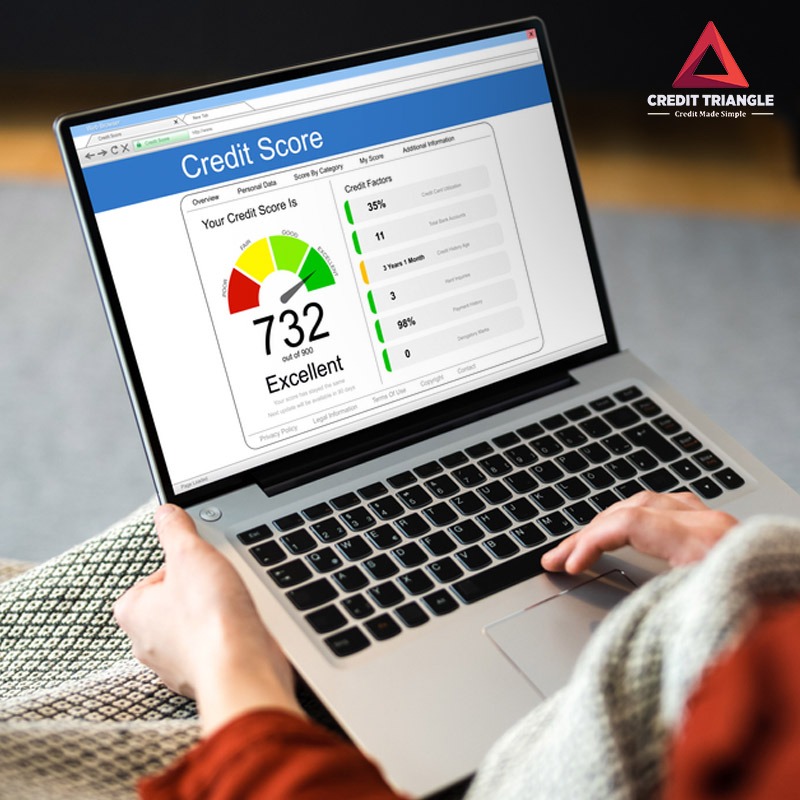
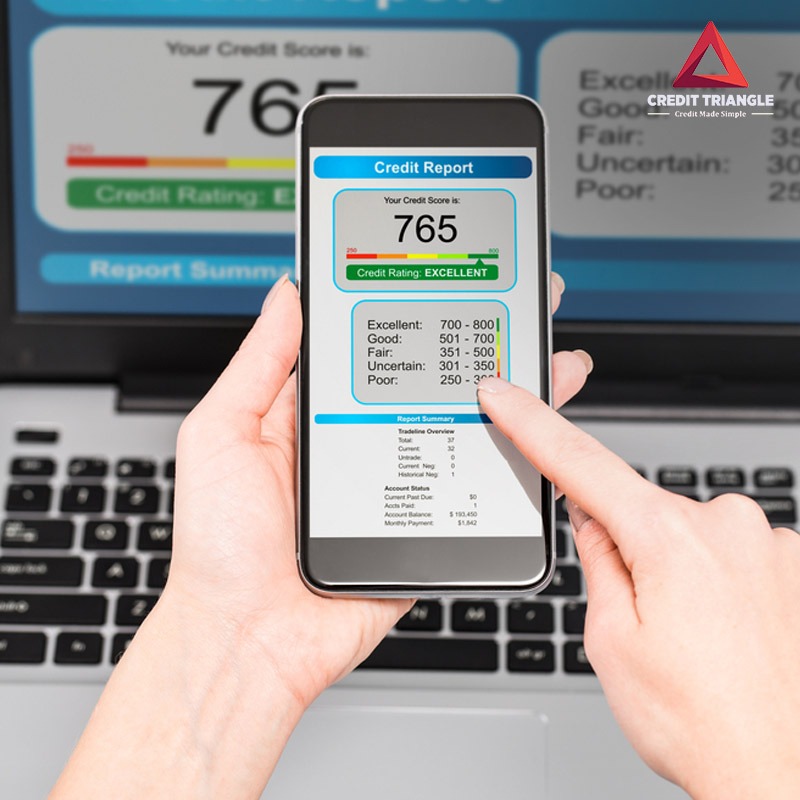
A credit score is a numerical measure of a person’s creditworthiness. It is a 3-digit number that ranges from 300 to 900. A score of 750 and above is considered to be a good score. If your credit score is not up to the mark, you could take measures to improve it or you could avail the services of a reliable credit improvement company.  

Being credit healthy is essential for one’s financial wellbeing. Sticking to good financial practices will make you a credit-healthy person. 

Credit Triangle is a one-stop solution for all your credit and finance needs. We help you with credit health management, repair and improvement.

Rewrite Your Credit History For Financial Freedom

Financial Freedom

In India, most working people start thinking about their retirement after they are well into their 30s or 40s. However, to have a peaceful and financially strong retired life, ideally you need to start planning for retirement soon after taking up your first job. That way, time would be on your side, to build a substantial retirement corpus over the long term through a disciplined investment approach. In other words, time and the power of compounding would give one financial freedom during his/her sunset years. 

So, what is financial freedom? The word freedom evokes a sense of hope, inspiration, choice and joy. It could mean very different things to different people. Financial freedom—having enough savings, investments, and cash on hand to afford the lifestyle you want for yourself and your family— is an important goal for many people. It also means accumulating enough wealth that will allow you to retire or pursue any career you want—without being driven by the need to earn a certain amount each year. Easy access to credit plays a big role in enabling financial freedom. 

Leaving positive footprints

An important aspect related to your financial dealings, that can have substantial bearing on your financial freedom, is your credit history, called credit footprint. As the term suggests, credit history is a record of your ability to repay debts and demonstrated responsibility in repaying them. Put simply, if your credit history is good, you are in a sweet spot to easily avail of loans from a lender or get a credit card from a card-issuing institution. On the other hand, if your credit history is bad, you may have a tough time getting a loan or a credit card. Individuals need to be very careful about their credit history. 

Taking care of your history

It is essential to review your credit report regularly. You can take a copy of your credit report from any of the four registered credit bureaus; CIBIL, Equifax, Experian and Highmark. A credit report is a detailed summary of your credit history and payment records from all your credit accounts, including the loans repayment to banks and financial institutions. Credit bureaus use the large amounts of data (on various credit facilities) available with them to generate these credit reports. A typical credit bureau report consists of four sections: Credit Score, Personal Details, Account details and Inquiries. A credit report is referred by potential lenders and NBFCs in order to get a fair idea about how eligible you are for receiving credit. 

Reviewing your credit report regularly helps in maintaining good credit health, achieving financial goals and identifying errors on the credit report. Remember that errors in your credit report can have a devastating effect on your financial health, and hence need to be rectified immediately. 

For a smooth financial life besides having a disciplined and well thought-out long-term investment plan, it is essential to have a good credit score, which comes from a solid credit history and good credit habits. Being credit healthy is a way of life; concrete steps in this direction can lead us to financial freedom

Credit Triangle is a one-stop solution for all your credit and finance needs. We help you with credit health management, repair and improvement.

Use Cards Judiciously To Improve Credit Score

Use Cards Judiciously To Improve Credit Score

Credit Cards, one of the most popular financial products of present times, are used extensively across a wide range of payment platforms, both online and offline. Though once considered a luxury, credit cards are now a necessity. They help you address your emergencies, needs as well as lifestyle upgradation, in a convenient manner. 

In order to maximize the benefits derived from a Credit Card, you need to use it with utmost financial discipline. If used judiciously, credit cards offer an excellent opportunity to manage finance by using the interest-free credit period. However, reckless usage of these cards can lead you into a maze of spiraling debt. For a spender who is not disciplined in prompt repayments, debt can mount in accelerated proportions.

Responsible use of credit cards, helps the users in improving their credit scores. To build your credit score by judicious use of credit cards, here are some pointers on what to do and what not to do in order to achieve this. 

Pay credit card dues on time: 

This will dramatically improve your credit score, which further helps to build credibility for future borrowing. Payment history is a key factor in determining credit scores.  

Pay the credit card bill in full:

Avoid falling into the trap of making the minimum payment. You must pay your Credit Card bills in full every month. If you only make minimum payments, not only will you have to service high-interest rate, but the lenders will consider you as credit hungry.

Monitor your Credit Utilisation Ratio (CUR):

One of the factors taken into consideration while calculating your CIBIL score is your credit utilisation ratio. It is advised that your credit utilisation ratio should be under 30%. This has a beneficial effect on your credit score. This shows your credit limit is high but you have not burnt it up and have plenty in reserve. If your CUR is above this level, it will have a negative impact on your credit score. If you have multiple Credit Cards, make sure that you spread your usage across them in such a way that the total CUR stays below 30%. 

Avoid multiple credit card applications simultaneously:

Excessive credit seeking behavior may affect your score negatively. Do not randomly go for every credit card offerDo your research and only then apply for the most useful card.

Closing credit card accounts

The number of years you hold a credit card account has an impact on your credit scores. Closing a credit card can damage your credit score, as it can lower the average age of accounts on your credit report

Request for hike in credit limit: 

The effect of an increased credit limit on your credit score depends upon how you use your credit card. A higher credit limit can help you achieve a low credit utilization ratio, which is healthy for your credit score. 


Judicious use of your credit card, would help you not only maximize the benefits of your card, but also maintain a healthy credit score, conveniently. 

Credit Triangle is a one-stop solution for all your credit and finance needs. We help you with credit health management, repair and improvement.


Avoid Rejection of Your Home Loan

Home Loan

Priya Agarwal, a young, upwardly mobile professional, working with a top retail company, had applied for a home loan. Having a decent salary and repaying capacity, she was confident that her application would be cleared within days. However, she was baffled when her loan application was turned down. 

On questioning the decision, she found out that the reason for rejection was that she had failed to pay some of her credit card bills on time. Unfortunately, for Priya, this rejection might prompt other banks to take a similar decision, since it would be considered a red flag in her credit report. Had she taken the trouble to check her credit rating before applying for the loan, she would have saved herself this trouble.

To help potential home loan customers avoid a similar fate, here’s a list of some of the grounds for home loan rejection. 

Stability quotient 

The first factor that banks consider is the repayment capacity of the borrower.  If the borrower’s salary package is not adequate, the loan application might be rejected. Other assets, such as property or fixed deposits, are also taken into consideration while ascertaining the financial stability of the borrower. Apart from this, banks factor in a customer’s job stability. Changing too many jobs reflects poorly on the home loan application. Banks consider job stability as an important criterion for approving a home loan.  

High level of debt 

If you are servicing any other loans, these are also taken into consideration, since they will have a bearing on an individual’s repayment capacity. If an applicant already has debts that need to be repaid, and if according to the lender’s analysis, his/her repayment capacity seems inadequate, then the loan application might be rejected. 

Being a Loan Guarantor

One also needs to be careful before agreeing to act as a guarantor for another person, as it can sometimes prove to be risky for you, especially when you yourself need a loan. This is because any default by the original borrower will also affect a guarantor’s score, and can lead to loan rejection. Thus, you need to be completely sure of the repayment capacity of the borrower, before becoming their guarantor.

The same logic applies while applying for a joint loan. Make sure that your co-borrower has a good credit score before you decide to join hands.

Applicant’s age

The age of the borrower is a crucial factor and most banks ensure that all the EMIs can be paid by him/her during the earning phase. Lenders avoid sanctioning home loans to applicants who are close to their retirement age. This is because after retirement, the applicants will have limited or zero repayment capacity. However, some banks may be willing to offer short-term home loans. Short term loans for big amounts would lead to a really high EMI which may not be financially comfortable for all. 

Credit Score/ Credit History

Credit history plays an important role in evaluating loan applications. If a borrower has defaulted on servicing previous loans, his current loan application is likely to be rejected. 

You should ensure you have a good credit score when you apply for a loan. Any bank, when it gets a loan or credit card application will pull out the individual’s credit score which is available with the credit bureaus. If your credit score is too low, then your home loan will be rejected. 

Discrepencies in Credit Report

Despite having a clean credit history, lenders can reject your home loan application due to an error in your credit report. Therefore, it is important for all potential home loan borrowers to check their credit reports before applying for a home loan.    

While defaults lead to serious repercussions, a good report—and, hence, a good credit score—can help you land a sweeter loan deal. 

Incomplete Documentation

Accurate documentation is an integral part of the approval process, failing which your home loan can be rejected. You must furnish all the documents as mentioned in the application form. The bank exercises due diligence to determine if the title of the property and related documents are in order since these guarantee the legality of a project. 

Property Details

Properties that have a good resale value, stable price, are in demand and are easy to sell, are preferred by lenders. Hence, while choosing your property, do not go for something too old. It is also advisable that the property is constructed by a reputed and trusted builder.   

These checks not only safeguard the bank’s interest, but also protect borrowers from legal hassles. 

Credit Triangle is a one-stop solution for all your credit and finance needs. We help you with credit health management, repair and improvement.

Are You A Credit Card Fraud Victim?

Are You A Credit Card Fraud Victim?

Increased digitization has resulted in a significant increase in online transactions. Credit card issuance and usage have witnessed tremendous growth. While this is a really convenient and hassle free option, it opens up the possibilities of fraud. Credit card fraud is on the rise, and if you’ve fallen victim, you are not alone. Credit card fraud can occur when unauthorized users gain access to an individual’s credit card information, in order to make purchases, other transactions, or open new accounts. It is a form of identity theft. If you’re a victim of fraud, you may incur unauthorized charges that can result in steep bills. And if your credit card balance increases drastically, you may risk damage to your credit score. This can be with an existing account, via theft of your physical credit card or your account numbers and PINs, or by opening new credit card accounts in your name.

How Credit Card Fraud occurs?

Lost or stolen card fraud: This old-school credit card theft can happen when a fraudster uses a card you’ve lost

Skimming: This happens when the information in your card’s magnetic strip is copied by inserting it in an electronic device.

Account takeover: Account takeover fraud occurs when cybercriminals gain access to your online accounts and use them to withdraw money, make purchases or extract information. 

Phishing: Phishing is one of the most common methods used to steal personal data. These are email traps, where you receive emails from people supposedly working at banks or government agencies, asking for confidential details pertaining to your account or credit card.

Steps to be taken if you are a victim of credit card fraud:

Inform the bank immediately

If you notice any kind of suspicious transaction on your credit/debit card, inform the bank/ card issuer immediately. One should lodge a formal complaint with the bank and ideally call up the customer care number to block the card or the account immediately. Once the card issuer or the bank has been informed about the fraudulent transaction, one should file a written compliant with the nearest police station.

Change your online passwords and PINs

Immediately change your online password and PINs related to your credit card account to prevent fraudsters from doing any further damage.

Closely monitor your account activity

This can be helpful if you are not sure how your information was compromised. Also, keep a close eye on your bank statements and if you notice any signs of fraud, immediately notify your credit card issuer.

Monitor your credit card statements and credit report.   

Fraudulent charges can keep appearing on your card statements months after your card information is stolen. 

Protect yourself from credit card fraud:

Destroy any bill or document that has your credit card information, before discarding it.

Review your card statements regularly.  If you see any unfamiliar purchases, contact the card issuer immediately.

Periodically review your credit reports for unfamiliar inquiries and loan or credit card accounts you didn’t open.

Be vigilant online. Stay safe from phishing and other online scams.

Secure your physical cards.

Do not give out your credit card information when someone calls or emails you.

Credit Triangle is a one-stop solution for all your credit and finance needs. We help you with credit health management, repair and improvement.